

The redesigned Google Maps pin hasn’t escaped your notice; the fresh look is now visible to everyone. But behind the scenes, Google is rolling out a much larger, completely new navigation experience. With the announcement of features powered by Gemini AI, the tech giant is promising its biggest update in over a decade.
Although these new features are not yet active everywhere (the rollout started in the US and India), there is already an incredible amount written about them online. As Google Maps experts at Localyse, we take you through the facts, the criticism, and why we believe this update is actually a huge step forward for road safety.
What exactly is changing in Google Maps?
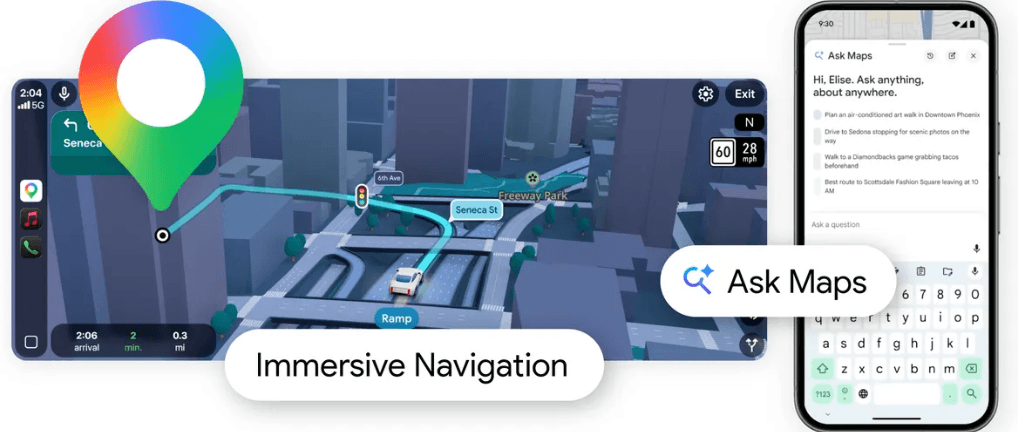
In the near future, the app will undergo a massive overhaul due to two major innovations:
- Ask Maps: Navigating becomes a conversation. You can ask the app complex questions out loud (“Where can I park on this route and grab a quick cup of coffee?”). The app answers them seamlessly based on your route and personal preferences.
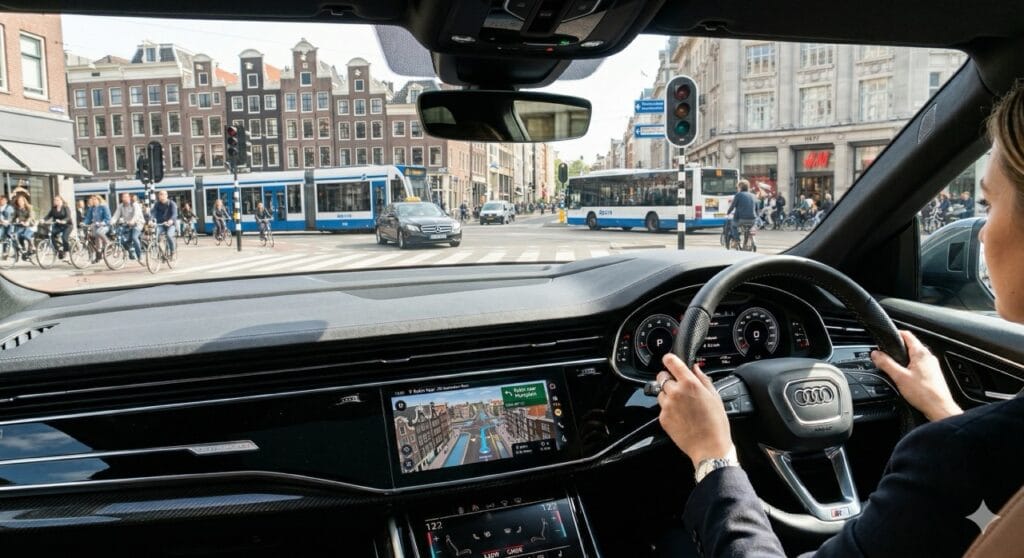
- Immersive Navigation: A complete transformation to a clear 3D environment. As tech platform Tweakers recently summarized in a positive blog, this 3D navigation should make complex traffic situations, such as turning and merging, much clearer by realistically highlighting buildings, lanes, and traffic lights.
Sourpusses or justified warnings?
When the world’s largest navigation provider overhauls its interface, traffic experts immediately pay attention. In the Dutch newspaper AD, we recently read the headline: “Experts sound the alarm over complete restyling of Google Maps: ‘Multitasking in traffic is not safe’.” The fear of these critics is that adding new features, interactions, and extra visual layers will only distract the driver more.
It is completely understandable that experts raise this issue: we want to prevent people from looking at their screens more than the traffic at all times. But aren’t we looking at the wrong side of the story here?
The Localyse vision: More relevance means less searching traffic
As experts in location technology at Localyse, we are convinced that these innovations will actually make driving safer. The big advantage of the new Ask Maps feature is that it results in fewer phone touches.
Looking at a screen in your hand and manually searching for stops is and remains one of the biggest distractions behind the wheel. Having a focused conversation with Google Maps is simply 100% safer.
| Traffic situation | Old situation | New Google Maps update |
| Searching for a stop | Manually typing and scrolling on the screen (high distraction). | Hands-free talking via Ask Maps (focus on the road). |
| Complex turns | Studying 2D maps and looking for street names. | Clear visual guidance via Immersive Navigation. |
| Relevance | Filtering information yourself from generic search results. | AI instantly filters the best fitting option on your route. |
Google takes safety extremely seriously
Let’s not worry and realize that Google has exactly the same goal as the critics: keeping the roads safe. Google recently consciously minimized the number of manual reports you can make while traveling (for example, you can no longer indicate that there is a car on the hard shoulder). Everything is done to keep your hands on the wheel.
As a market leader, Google only launches new options once they trust them three times over. They cannot afford any safety risks or legal hassle. This also explains why the development of truck navigation took so long and why emergency services like the police do not drive on the standard consumer version today. Until a function is deemed 100% safe, Google ruthlessly excludes certain use cases in their general terms and conditions.
In short: we should embrace these AI features for what they essentially are: smart innovations that give us the opportunity to leave our phones alone. We at Localyse can’t wait until we can have a hands-free conversation with the map!
Frequently Asked Questions (FAQ)
When are Ask Maps and Immersive Navigation coming to Europe?
Currently, the rollout of these new Gemini AI features has started in the United States and India for Android and iOS. It is not yet officially known when the full update will be available in Europe, but preparations (such as the new pins) are already visible.
Does the new 3D navigation cause more distraction?
Critics fear it might, but experts emphasize that Immersive Navigation actually creates peace of mind. Because lanes and exits are displayed much more realistically, drivers have to look at their screens for shorter periods of time to understand the traffic situation.
How does Ask Maps improve road safety?
Ask Maps allows you to ask complex questions about your route using voice commands. This means you no longer have to manually type or search on your phone screen while driving, removing one of the biggest causes of distraction in traffic.
In short
Google Maps is actually making traffic safer by introducing voice-activated AI (Ask Maps) and updated 3D routes (Immersive Navigation). Through these smart integrations, drivers have to touch their phones less and can oversee complex traffic situations much better. More relevance simply means less searching and less distracted driving.


