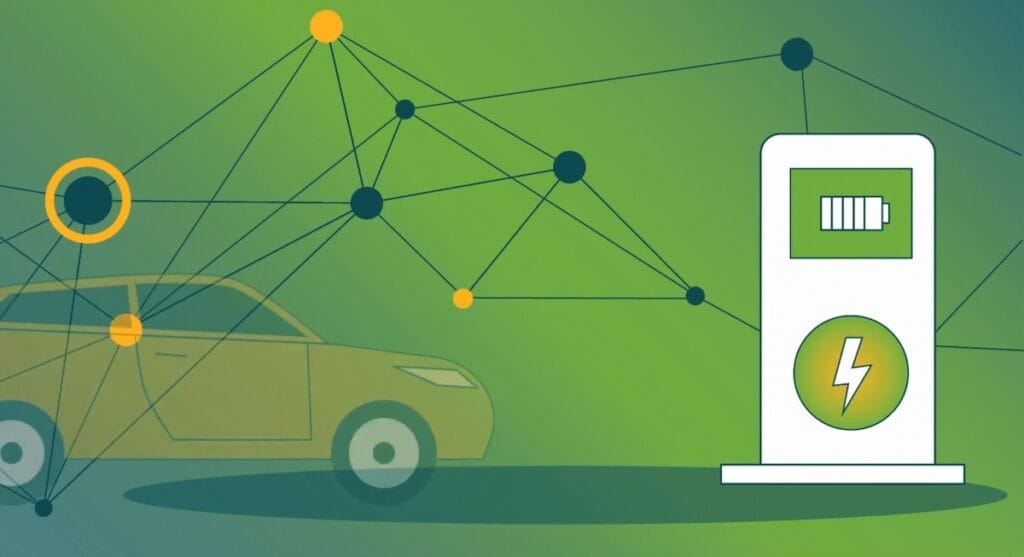

Electric vehicles are becoming mainstream, but one challenge continues to slow adoption: EV range anxiety. Drivers often arrive at public charging stations unsure whether a charging port will be available, leading to frustration and inefficient routing.
Recent research from Google shows that predictive location intelligence can significantly reduce this problem. By analyzing historical charging behavior, time-of-day patterns, and location data, a lightweight AI model can accurately predict charging port availability in the near future.
In real-world deployments, this approach reduced incorrect availability predictions by up to 40% during peak hours. The result is a smoother charging experience without relying on complex or resource-intensive models.
Why predictive availability matters for EV mobility
- Reduced waiting times at public charging stations
- Smarter EV routing, based on real-time and predictive data
- Improved driver confidence, lowering EV range anxiety
- Scalable infrastructure, using efficient AI instead of heavy systems
This innovation highlights a key principle in modern mobility platforms: simple, well-designed predictive models can outperform complex solutions when applied at scale. For location-based services, combining accurate location data with behavioral patterns enables more reliable, user-centric experiences.
At Localyse, we see predictive availability as a critical building block for next-generation mobility, navigation and location intelligence solutions. By transforming raw location data into actionable insights, platforms can improve efficiency, sustainability, and user trust across the EV ecosystem.


